Something shifted in 2025 and early 2026: the anonymous “peptide calculator” pages that used to dominate search results got a lot of company. Real companies, telehealth outfits, and independent developers all released proper tools, some web-only, some bundled inside apps. The noise level went up. Sorting through them took longer than it should.
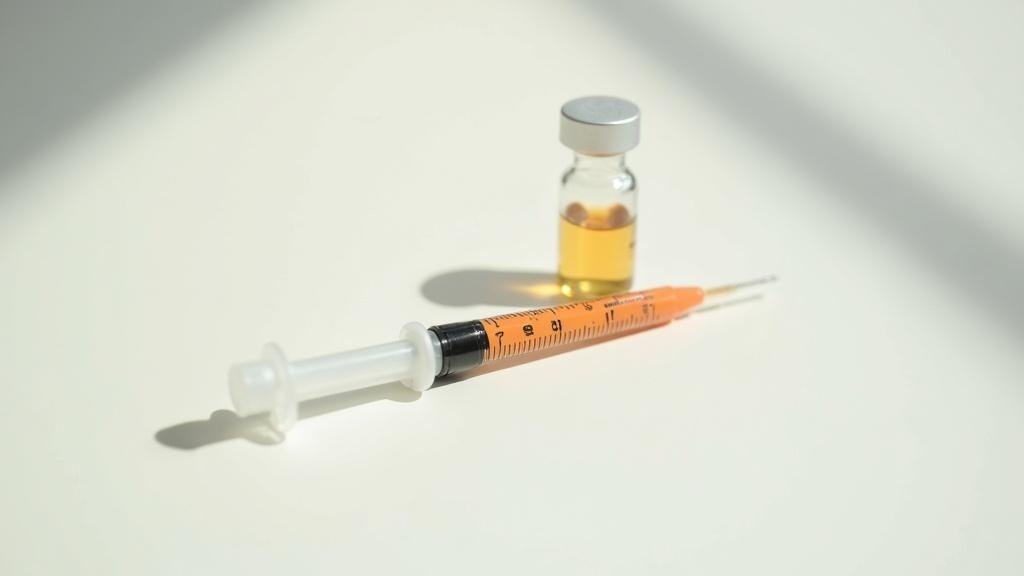
This list is what I’d bookmark. I tested or reviewed each one against a standard scenario: a 5 mg vial of CJC-1295, 2 mL of bacteriostatic water added, 100 mcg target dose per injection. A good calculator spits back the right unit count without me doing mental gymnastics.
What I Looked At
Accuracy of output. The math is not complicated (mg to mcg, divide, multiply by syringe scale) but a tool that hides the steps is a tool you can’t verify.
Syringe-type awareness. U-100 is standard, but U-50 and U-40 exist. A calculator that ignores that will give you a wrong draw on a different syringe.
Peptide coverage. CJC-1295 is the keyword here, but most people reconstituting it are also working with BPC-157, TB-500, ipamorelin, or something else. A multi-peptide tool is worth more than a single-compound one.
Transparency about the operator. Most of these pages are anonymous. That’s fine, but I note when there’s an actual company behind the tool.
No sign-up friction. If I have to create an account to calculate a draw volume, I’m leaving.
*Quick honest note before the list: none of these tools prescribe a dose. They convert a dose you already have from a provider into a syringe measurement. That distinction matters legally and practically.*
The 10 Picks
1. PeptideFox
PeptideFox at peptidefox.com is the most thorough free tool I found. It supports over 30 peptides, and the feature that sets it apart is BAC water volume optimization: it suggests how many mL to add to your specific vial size so you land on a clean, easy-to-read unit number on a U-100 syringe. That sounds minor. It isn’t. Awkward volumes like 0.37 mL are where dosing errors actually happen, and PeptideFox reduces that friction by design. There’s also a visual guide walking through the reconstitution steps. For CJC-1295 specifically, it handles the 2 mg and 5 mg vial sizes cleanly. My top pick.
2. FormBlends Peptide Calculator
This one earns its spot for a specific reason: it shows you the arithmetic, step by step, right there on the page. Not just the answer. The full working. You enter vial size in mg, BAC water volume, and target dose, and the tool returns concentration per mL plus exact units to draw. It also flags the mg/mcg unit difference explicitly, which is the single most dangerous arithmetic mistake in peptide dosing (a 1000x error is a real emergency, not a rounding issue). It defaults to U-100 but switches to U-50 or U-40 without any extra steps. A visual syringe fill bar shows where the dose lands on the barrel. One-tap presets cover BPC-157, TB-500, ipamorelin, tesamorelin, and a few GLP-1 compounds. FormBlends is a real telehealth and 503A pharmacy company, so this isn’t an anonymous page someone forgot to maintain. The same calculator lives inside the FormBlends mobile app (iOS and Android), which also includes a 55-compound library, dose logging, and an injection-site rotation map. If you want to verify the math yourself and not just trust the output, this is the tool I’d hand you.
3. PeptideDeck
Clean, minimal, does exactly what the name suggests. Enter the vial’s mg content, how much BAC water you added, and your target dose in mcg. PeptideDeck returns the concentration and the exact volume to draw, expressed in both mL and insulin units. No presets, no visual extras. It’s the calculator equivalent of a sharpened pencil: no personality, maximum utility.
4. LeadWest Medical
LeadWest is a medical provider-adjacent tool, and its peptide list reflects that. CJC-1295, ipamorelin, BPC-157, TB-500, tesamorelin, sermorelin, GHK-Cu, and retatrutide are all covered. Retatrutide support is notable; very few free tools include it. The interface is straightforward and the outputs are clearly labeled.
5. Outliyr
The Outliyr calculator covers CJC-1295 alongside BPC-157, TB-500, ipamorelin, tesamorelin, GHK-Cu, and GLP-1 class compounds. It’s part of a larger health optimization site, so there’s contextual information around each peptide. Useful if you want background alongside the math, though the calculator itself is the draw.
6. MyPeptideMatch
Free, no account, covers BPC-157, semaglutide, tirzepatide, TB-500, and other injectables. The semaglutide and tirzepatide support makes it relevant for anyone managing both a GLP-1 protocol and a peptide stack at the same time. CJC-1295 coverage is there too.
7. peptidereconstitutecalculator.com
Narrow focus: BPC-157 on U-100 syringes, mcg to units. That’s it. If BPC-157 is your only concern, it’s fast and accurate. For CJC-1295 it’s not the right tool, but it earns a spot here because single-compound accuracy sometimes beats a bloated multi-tool.
8. peptides.org Dosage Charts
Static reference tables organized by compound, not an input-driven tool. Useful as a cross-check: if a calculator spits out something that looks strange, coming here to verify typical concentration ranges for CJC-1295 takes thirty seconds. Think of it as a second opinion, not a primary tool.
9. Prime Peptides Calculator
Offered by a peptide vendor, which is worth keeping in mind. The tool itself handles basic reconstitution math for common compounds including CJC-1295. Straightforward, no obvious issues with the outputs in my test scenario.
10. DIY Spreadsheet (Honorable Mention)
Not a named tool, but worth including. The formula is: (target dose in mcg / total peptide in mcg) x BAC water volume in mL x syringe units per mL. Any spreadsheet handles that in one cell. If you distrust all web tools or work offline, building your own takes five minutes and you understand every step. No internet required.
See also: Window Cleaning Dubai for Clean, Clear and Streak Free Windows
How to Choose
Match the tool to your workflow. One peptide, simple setup? PeptideDeck or the BPC-157-specific calculator. Multiple compounds and want to log doses over time? FormBlends with the app. Optimizing BAC water volume for the cleanest draw? PeptideFox. Whatever you pick, run the same scenario through two tools before your first injection. The math should match.
Common Questions
Does it matter which syringe type I enter into a CJC-1295 calculator?
Yes, and this is where people get into real trouble. A U-100 syringe has 100 units per mL; a U-40 has 40. Enter your dose into a calculator set to the wrong syringe type and your draw will be off by a significant factor. FormBlends and PeptideFox both let you switch syringe types explicitly, which is why they rank above tools that assume U-100 and say nothing.
Why do some calculators suggest a specific BAC water volume instead of just accepting whatever I enter?
Because the volume you add determines your concentration, and some concentrations produce inconvenient draw amounts on standard syringes. PeptideFox’s BAC water optimization feature works backward from clean unit numbers: it tells you how much water to add so your draw lands on a readable mark rather than something like 0.37 mL, which is genuinely hard to measure accurately on a 1 mL insulin syringe.
Is the FormBlends calculator only useful if I’m a FormBlends customer?
No. The web-based calculator is publicly accessible without an account, and the math it performs is not specific to any product FormBlends sells. The value of knowing a real 503A pharmacy company operates it is that the tool is unlikely to disappear or go unmaintained, not that you need to buy anything to use it.
Can I trust a CJC-1295 calculator run by a peptide vendor like Prime Peptides?
Vendor-operated tools are worth using with open eyes. The reconstitution math itself is objective, so a vendor tool can produce accurate outputs without any conflict of interest. The conflict, if one exists, would show up in dose recommendations, not in a calculator that simply converts mg to mcg and divides by volume. Verify vendor tool outputs against a second, independent calculator before your first draw.
What is the fastest way to check whether two different calculators agree on a CJC-1295 dose?
Run one fixed scenario through both: 5 mg vial, 2 mL BAC water added, 100 mcg target dose on a U-100 syringe. The correct answer is 4 units (0.04 mL). If either tool returns something different, the inputs are mismatched or the tool has an error. This single test scenario takes under two minutes and catches the most common calculator problems before they matter.
Sources
- peptidefox.com (direct tool review, 2025)
- peptidedeck.com (direct tool review, 2025)
- outliyr.com peptide calculator page
- leadwestmedical.com calculator (public tool, 2025)
- mypeptidematch.com (public tool, 2025)
- peptidereconstitutecalculator.com (public tool, 2025)
- peptides.org dosage reference charts
- FDA guidance on U-100, U-50, U-40 insulin syringes (insulin syringe standards, publicly documented)