There is a particular kind of hesitation that only shows up when a product you already like gets a newer version. You are not unhappy with what you own, you are not desperate for a replacement, and yet the announcement makes you wonder whether you are quietly missing out. That is exactly where many first-generation owners find themselves now. The original machine still makes a good cup, the routine is familiar, and the counter space is already claimed. The question is not whether the newer model is better in some abstract sense. It is whether the differences matter in your kitchen, on your schedule, and for the way you actually drink coffee.
What actually changed in the grinder
The most talked-about change is the grinder, and for good reason. Grinding is where home espresso is usually won or lost, and it is also where beginners feel the most uncertainty. The second generation offers a much wider range of grind settings, reported at forty-five steps, which gives you finer control when you switch between beans, roasts, or brew recipes. In practice, that does not mean you will use all forty-five settings. It means you are less likely to land in that frustrating gap where one step is too coarse and the next is too fine, with nothing useful in between.
The portafilters and the daily routine
The second change worth noting is in the portafilters. The newer set is designed to feel more secure and more forgiving in daily handling, which sounds minor until you remember how often you lock one in, knock it, rinse it, and lock it in again. Small improvements in fit and balance reduce the little annoyances that accumulate over months: grounds on the counter, a basket that feels awkward to dose, a handle that never quite sits right in your hand.
Again, the value depends on how you use the machine. A household that pulls two shots every morning will notice handling improvements quickly. A household that uses the machine a few times a week may find the original perfectly comfortable. Neither experience is wrong. It is simply a reminder that upgrades are felt most by the people who use a product most often, and that is a useful test to apply to your own routine before spending anything.
Brewing, consistency, and what stays the same
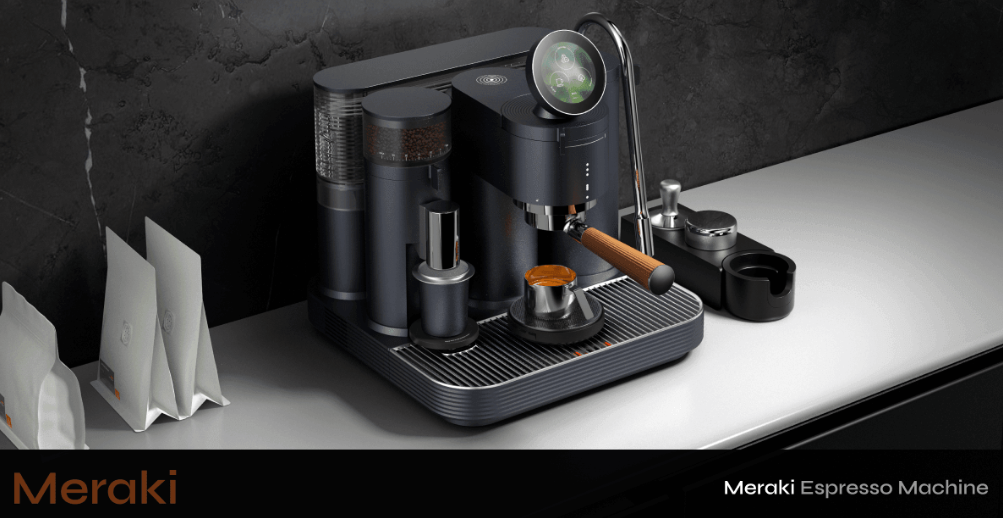
Beyond grinding and handling, the brewing experience remains familiar in the best sense. The dual-boiler approach, the built-in scales, and the guided workflow that made the first generation approachable are still central. You are not learning a completely new machine. You are learning a slightly more flexible version of a machine you already understand. That matters, because the learning curve is often the hidden cost of an upgrade. Here, it is low.
Consistency is where the comparison becomes interesting. The original already produces repeatable results once you have dialled in a recipe, and many owners report that their morning cup is reliably good. The successor does not suddenly make a mediocre recipe excellent. What it does is make it easier to recover when something changes: a new roast, a different dose, a bean that ages faster than expected. If your coffee life is stable, that flexibility is a luxury. If you like to experiment, it is a genuine tool.
For a detailed side-by-side breakdown, see the Meraki Gen 2 vs Gen 1 comparison, which walks through the changes in full.
The cost question, answered honestly
No upgrade discussion is complete without talking about money, and here the maths is personal. An upgrade only makes sense if the price is justified by the improvement you will actually use. If you are buying the newer model as a first machine, the decision is simpler: you are choosing between two generations at whatever prices are current, and the newer grinder and handling improvements are worth weighing seriously. If you already own the original, you are paying the full difference for incremental gains, and those gains need to earn their keep.
Think about it in terms of cups rather than features. How many shots do you pull in a week? How often do you change beans? How much does dialling in frustrate you? If the answers are many, often, and a lot, the upgrade case strengthens. If the answers are few, rarely, and hardly at all, the original is probably still enough, and the money is better spent on fresh beans, a good tamper, or simply enjoying what you already have. There is no shame in staying put. A machine that still makes coffee you enjoy has not become obsolete just because a newer one exists.
Who should upgrade, and who should wait
Upgrade if you are a frequent experimenter, if you regularly switch roasts, or if grinding limitations have genuinely held you back. The expanded grind range and refined handling will be used, not just admired. Upgrade also if your original machine is showing wear, or if you were already considering a second machine for another household or an office. In those cases, the newer generation is the natural choice.
Wait if your routine is settled, your recipe is dialled in, and your morning cup already makes you happy. Wait if the budget is tight, or if you would rather spend on beans and accessories than on a replacement. The original remains a capable, integrated system, and there is no penalty for enjoying it for another year or two. Technology moves on, but taste does not expire on a release schedule.
See also: How city readers judge gaming websites on a phone
A practical way to decide
Try a simple test over the next week. Keep a note of every time you wish your grinder had a setting between two steps, every time handling annoyed you, and every time you wanted more flexibility. If that list is long, you have your answer. If it is empty, you also have your answer, and it is the cheaper one.
For owners who do decide to move on, the Meraki espresso machine upgrade page outlines the available path. For everyone else, the best advice is refreshingly boring: keep brewing, keep tasting, and let the upgrade earn its place rather than assuming it has one. The original is still enough for a great many kitchens, and a great cup of coffee does not care which generation made it.